Project S.O.S: Addressing Neonatal Mortality in Pakistan
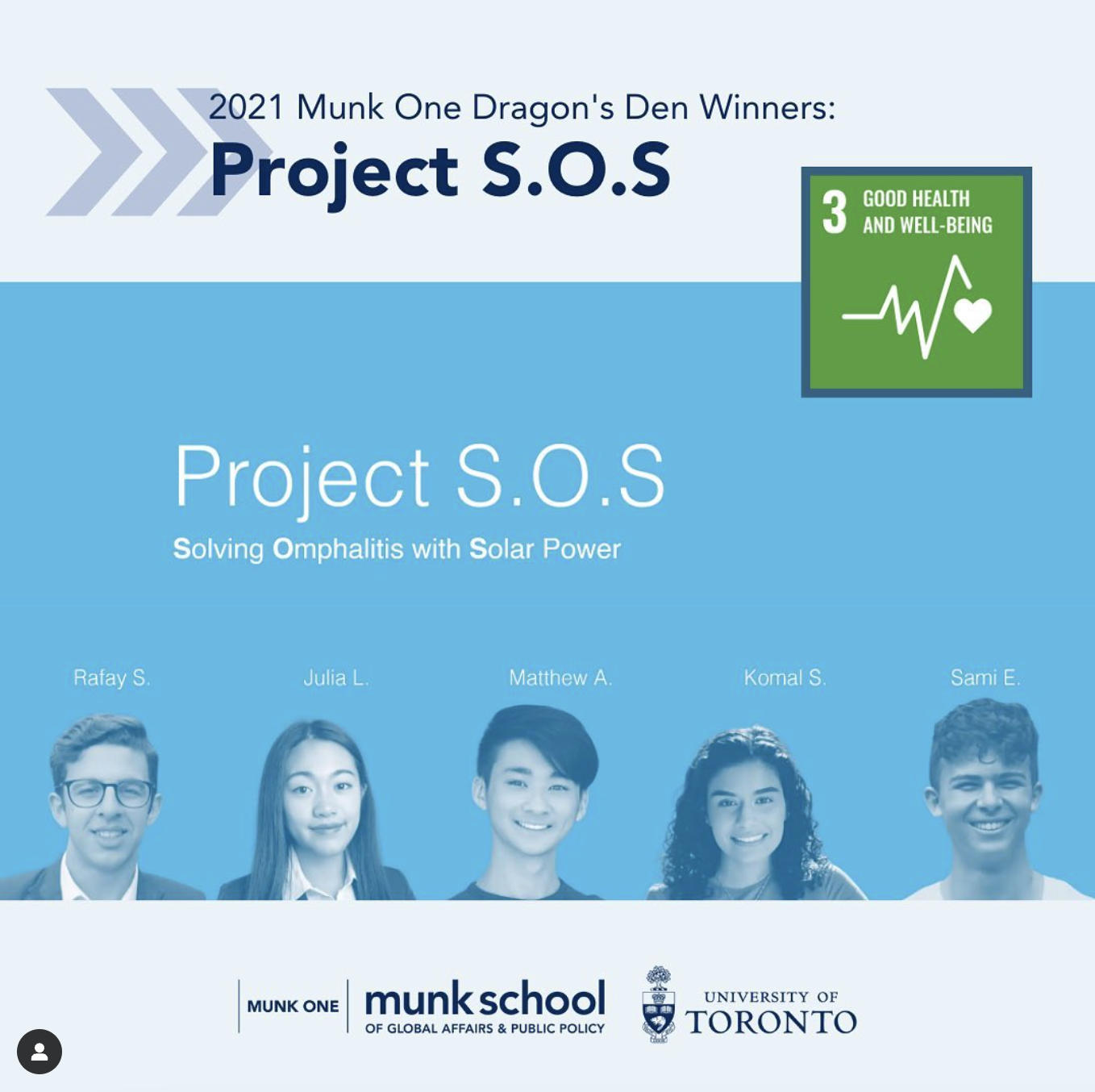
Project S.O.S was an award-winning strategic proposal designed to tackle Pakistan’s high neonatal mortality rate – specifically deaths caused by omphalitis (umbilical cord infections). Our team engineered a high-fidelity policy and technical framework for a low-cost, solar-powered autoclave to sterilize medical tools in off-grid rural regions.
Winner: 2021 Munk School of Global Affairs & Public Policy Munk One Dragon’s Den Pitch Competition
Awarded $5,000 in seed funding for project feasibility and stakeholder development.
Strategy & Policy Literacy
Our research focused on the “Administrative Silos” and technical barriers preventing sterile birth deliveries:
- Targeting SDG 3.2.2: Addressed the 75% of neonatal deaths occurring in the first week of life by identifying unsterilized equipment as a primary, preventable vector for sepsis.
- Technical Logic: Proposed using optically transparent aerogels to provide 10x more thermal insulation than standard solar collectors, allowing for medical-grade sterilization ($121$°C) even in hazy or cloudy conditions.
- Frugal Engineering: Designed a device with a projected material cost of $350, aiming to bypass the need for a stable electrical grid or expensive fuel.
Stakeholder Engagement
A core component of this project was navigating the complex healthcare ecosystem in Pakistan. We conducted deep-dive consultations and built partnerships with:
- Clinical Leaders: Collaborated with Aga Khan University experts and the Medicare Health Foundation to ensure the proposal met the needs of Traditional Birth Attendants (TBAs).
- Industrial Partners: Negotiated manufacturing logic with InstaEnergy to verify local production viability.
- Global Health Experts: Integrated feedback from WHO surveillance officers regarding the cultural barriers and “last-mile” delivery challenges in the Punjab province.
Reflection: Policy as the Prototype
While the physical prototype was not developed beyond the conceptual phase, the project served as a rigorous exercise in Health Policy Strategy.
The $5,000 Dragon’s Den win validated our ability to take a complex medical crisis and engineer a culturally-attuned, economically viable solution. This experience honed my ability to speak the languages of both engineering and public health policy, emphasizing that technical innovation is only effective when supported by a robust stakeholder network.