Linguify is a full-stack web application that allows users to analyze the linguistic diversity of their Spotify libraries. By processing track metadata and lyrics, the app generates a comprehensive language profile, identifying bilingual tracks and providing tools for lyric-based language learning
Technical Stack
-
Backend: Flask (Python) following Clean Architecture principles to decouple business logic from external APIs.
-
Frontend: React and Tailwind CSS for a responsive, dark-mode dashboard.
-
Database & APIs: Spotify Web API (OAuth 2.0), Musixmatch/Genius API, SQL for Database Query
-
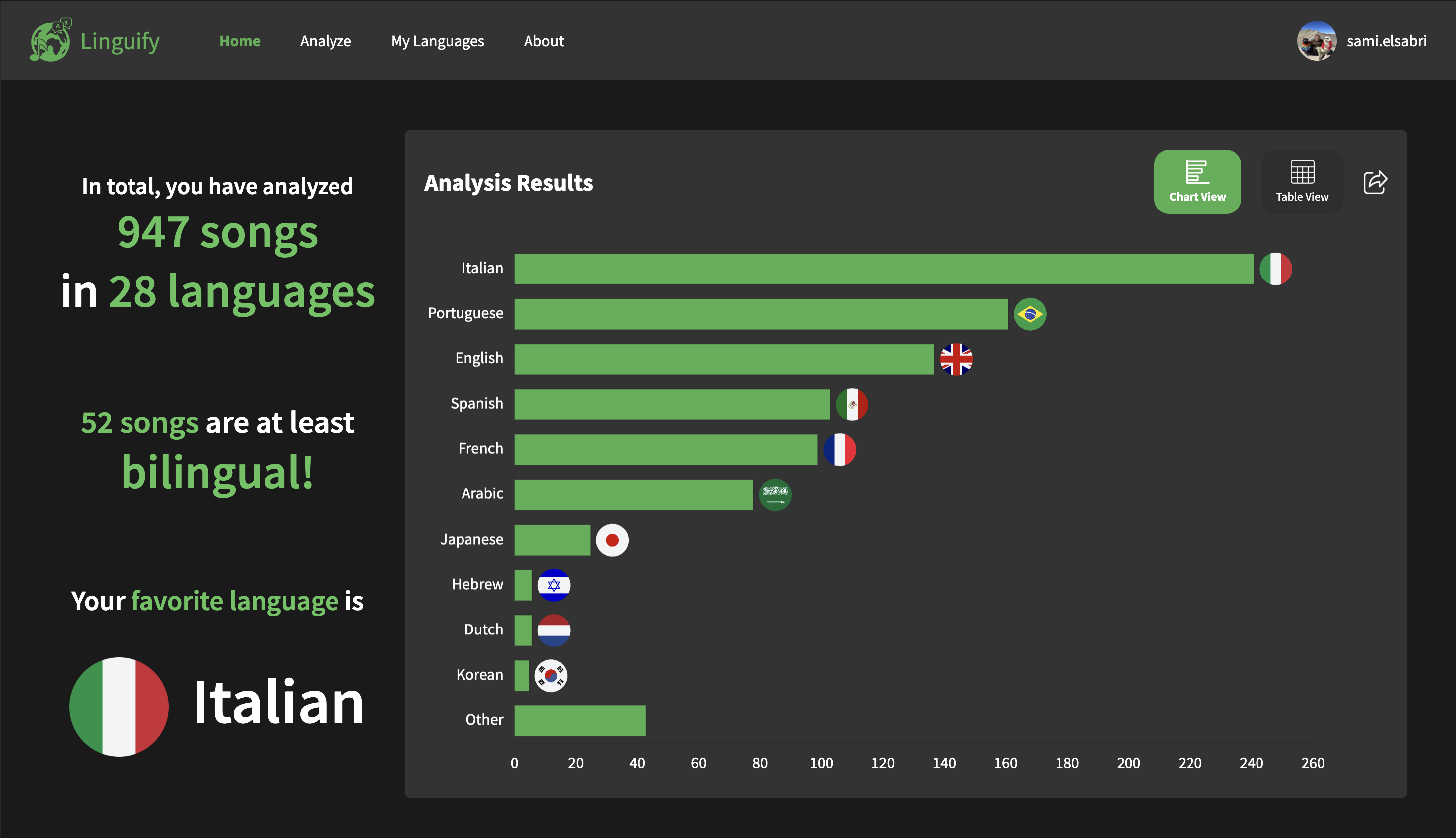
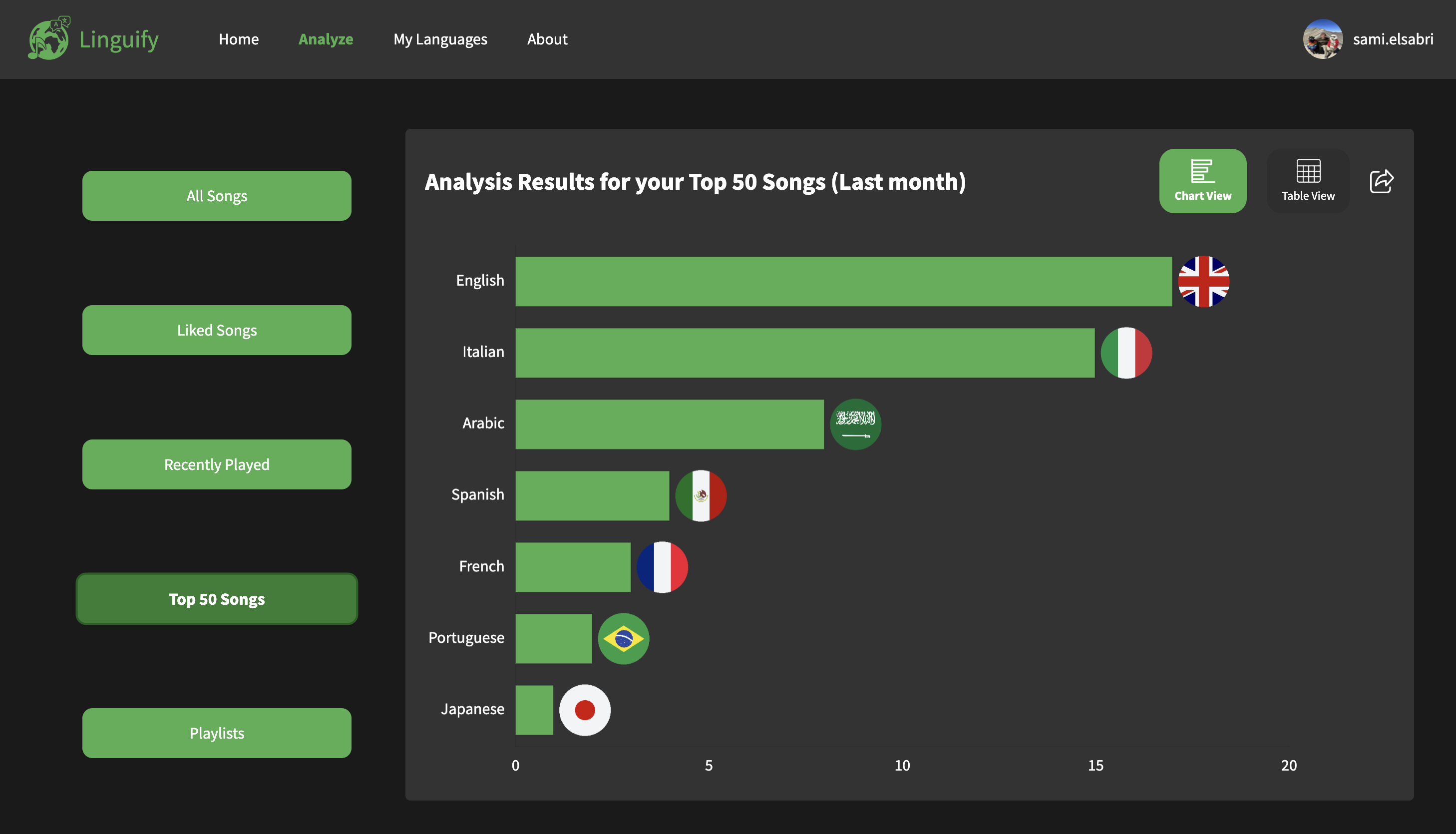
Data Visualization: Custom Charting (Chart.js), Dynamic Dashboards, Mapbox SDK for geospatial visualization
-
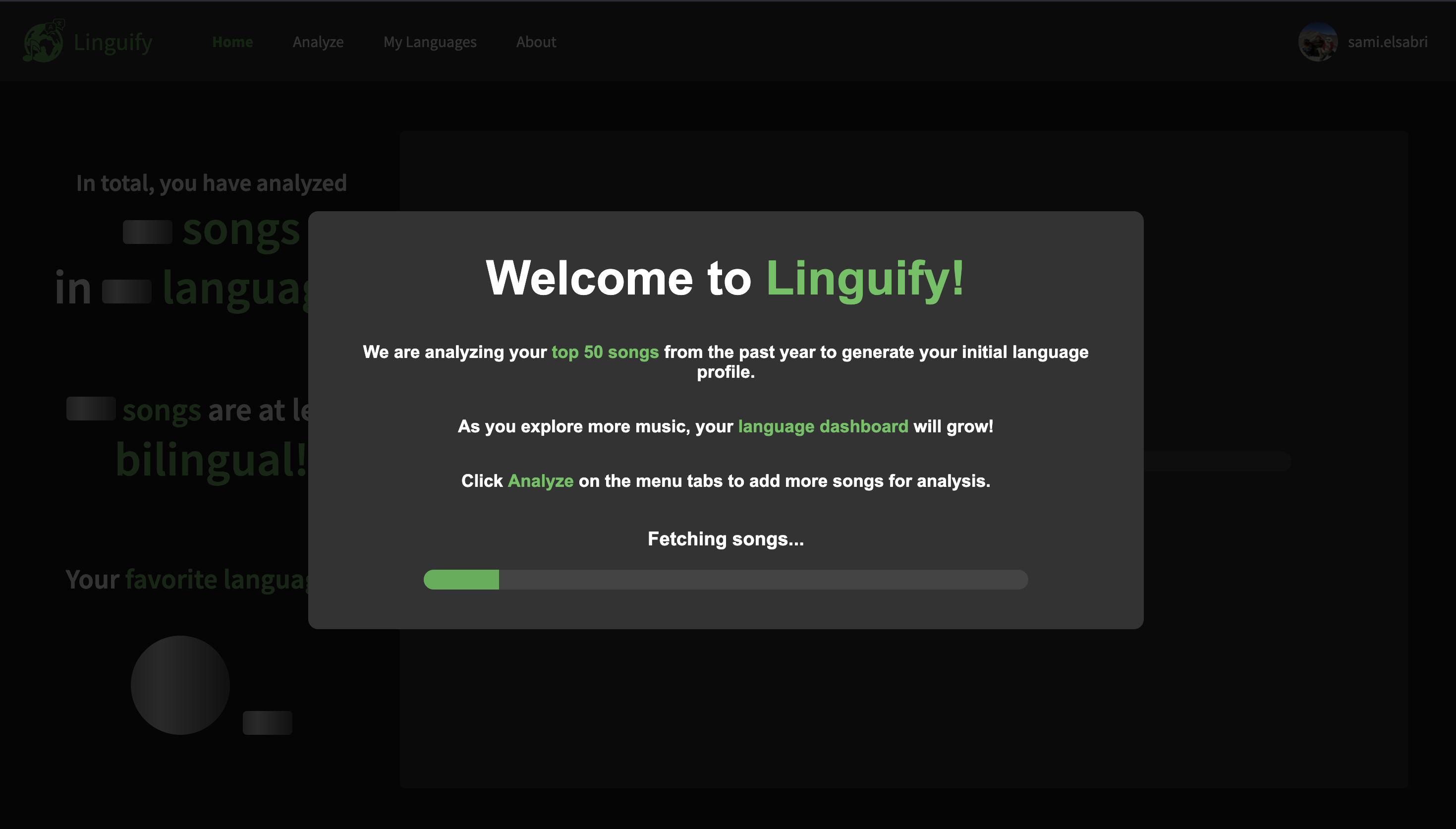
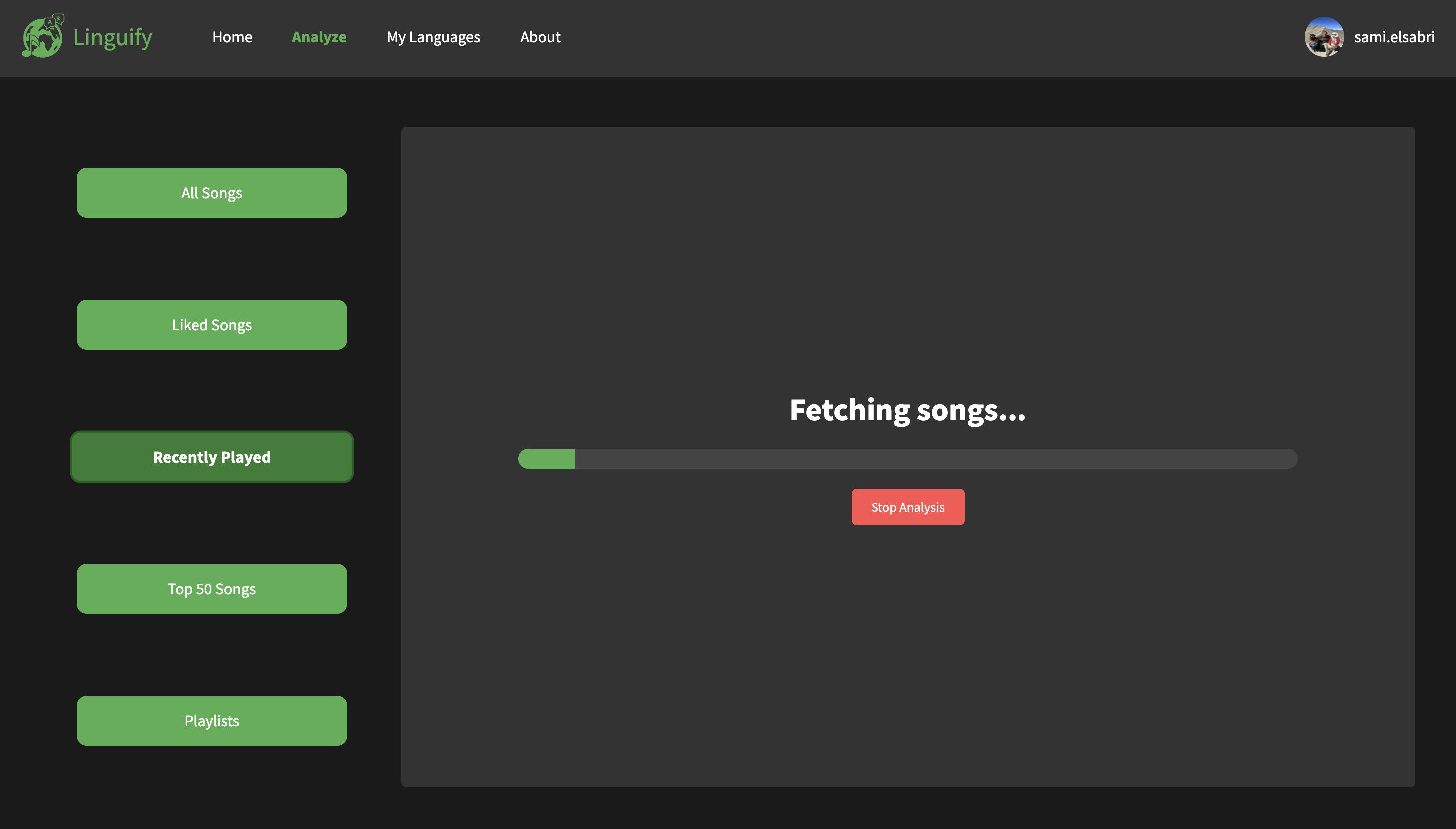
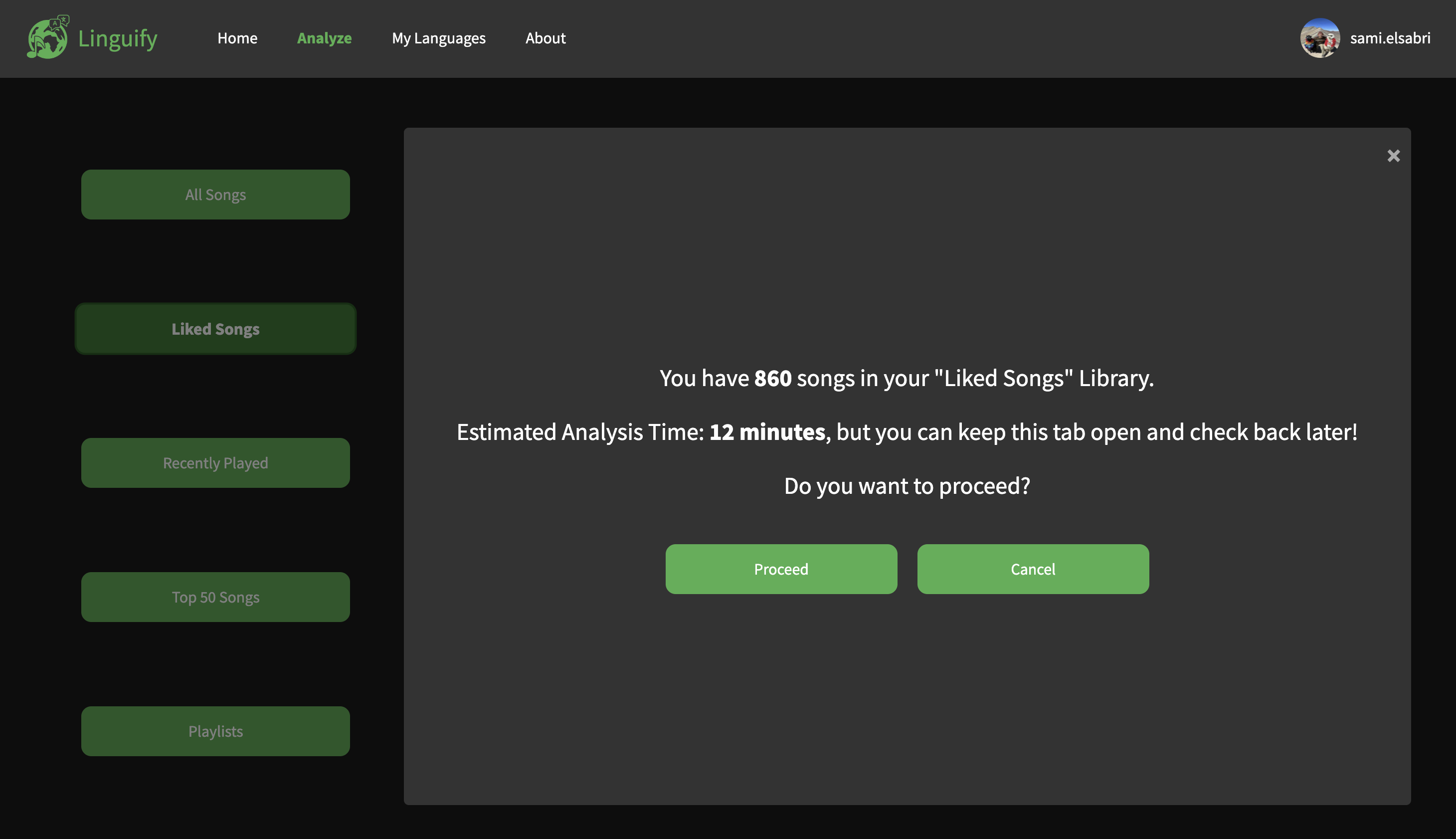
State Management & Parallel Processing: Real-time analysis progress tracking for large libraries (e.g., “Liked Songs” analysis)
To ensure high accuracy in language classification, I implemented a multi-layered detection pipeline:
-
Natural Language Processing: Initial language detection performed on song lyrics.
-
Heuristics Programming: When NLP certainty scores fell below a specific threshold, the system automatically fell back on secondary heuristics, such as artist metadata and album-level language tags, to resolve ambiguities.
-
Scalability: Designed the backend to manage long-running tasks, providing users with estimated analysis times for large libraries.
Key Features
1. Automated Library Analysis
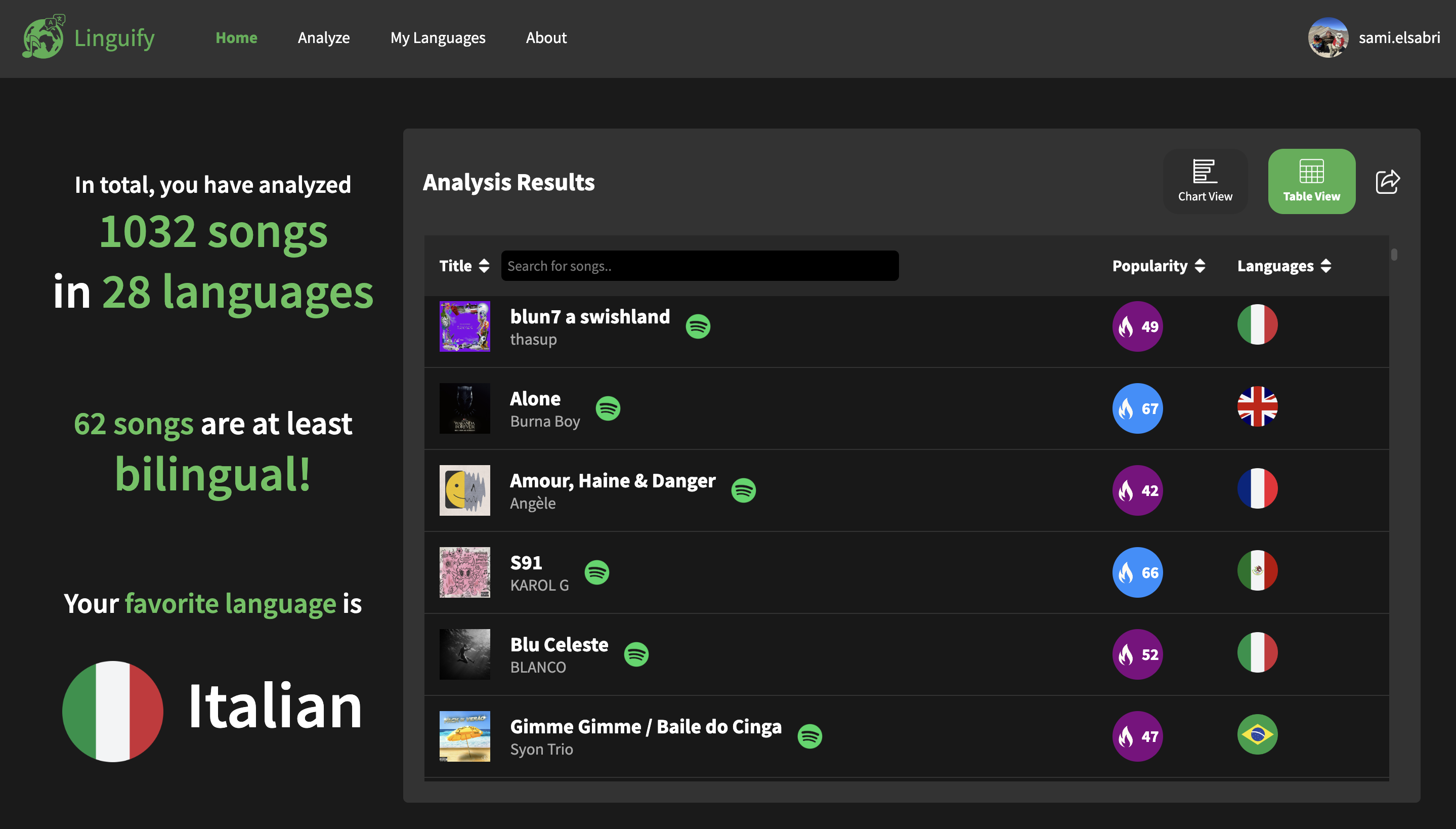
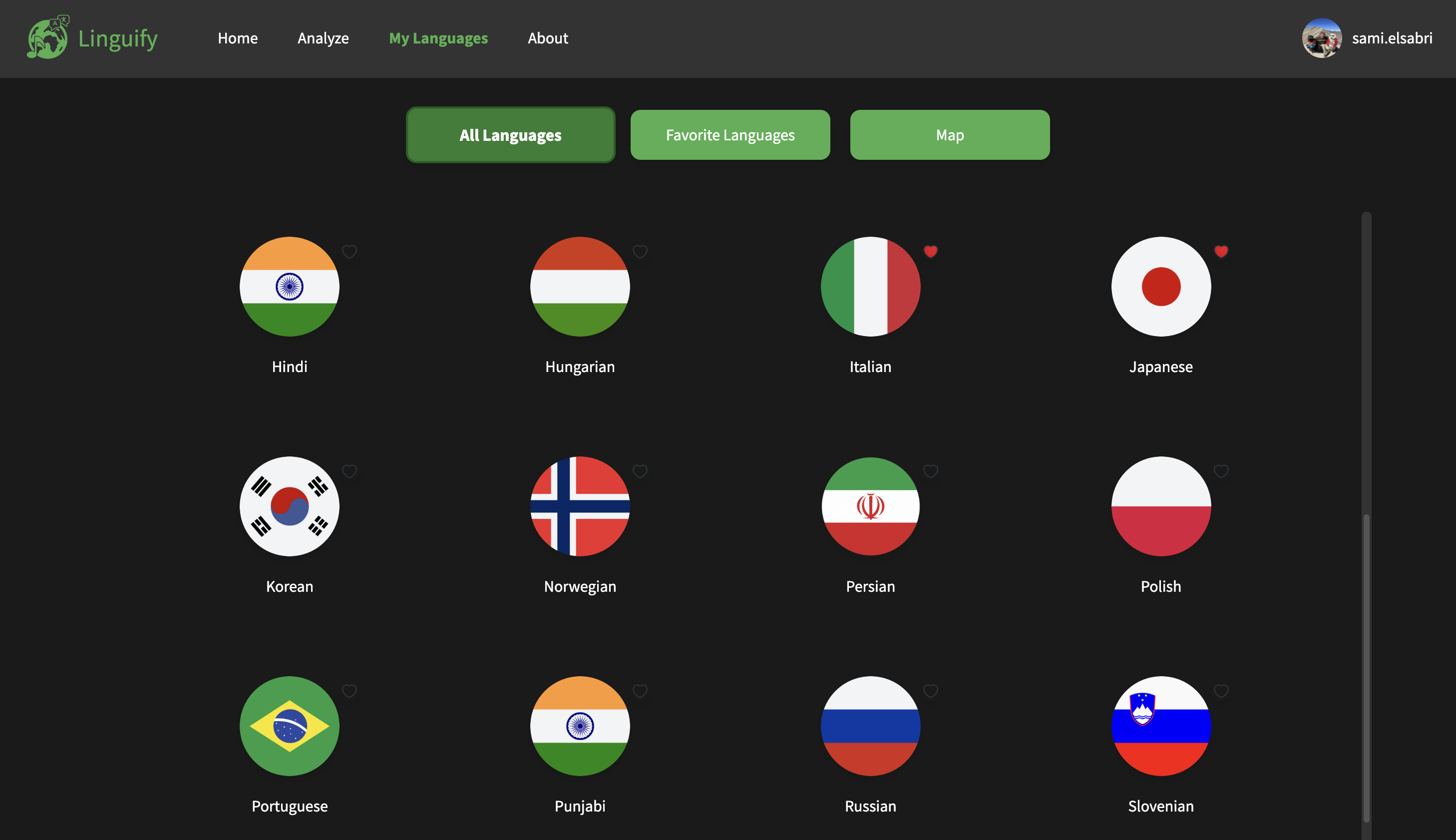
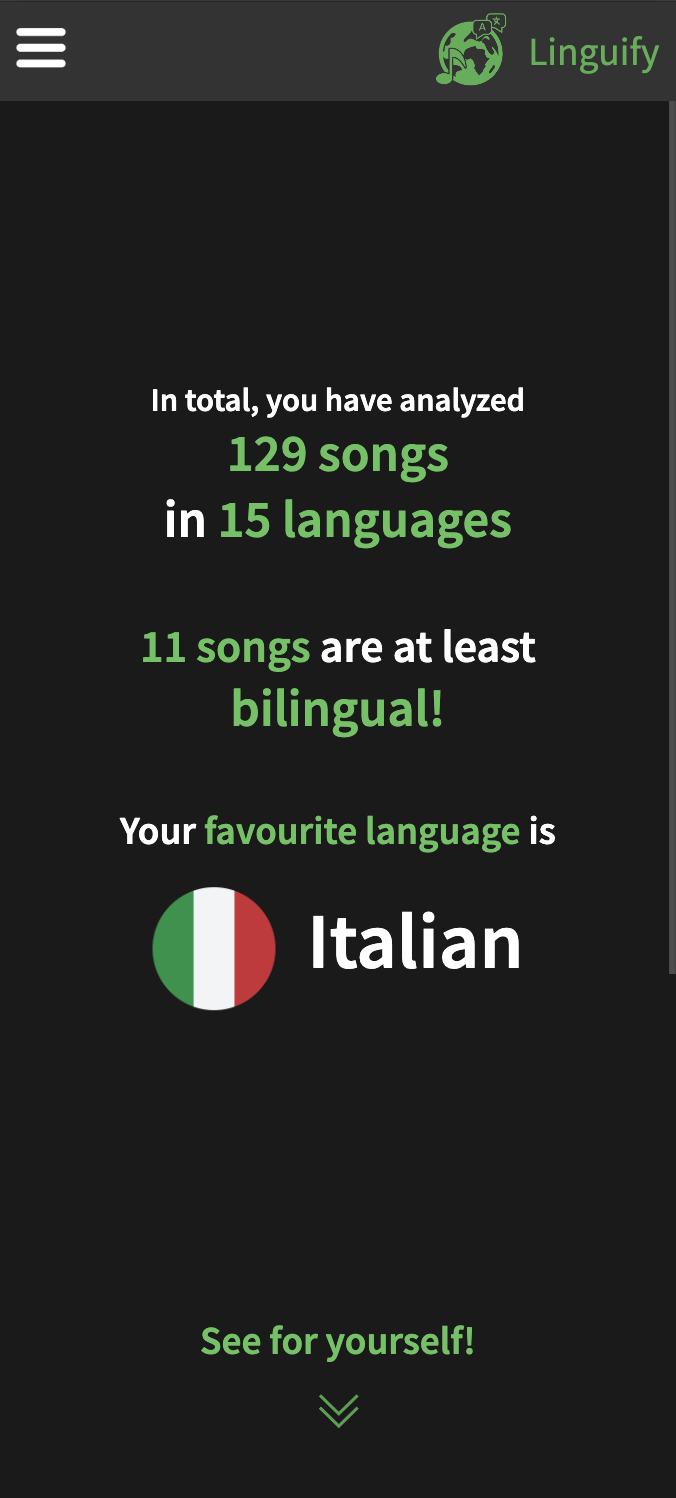
The application analyzes user libraries (up to 1000 songs across 28+ languages in test cases) to determine favorite languages and listening habits. It handles long-running data tasks by providing users with estimated analysis times and progress updates.
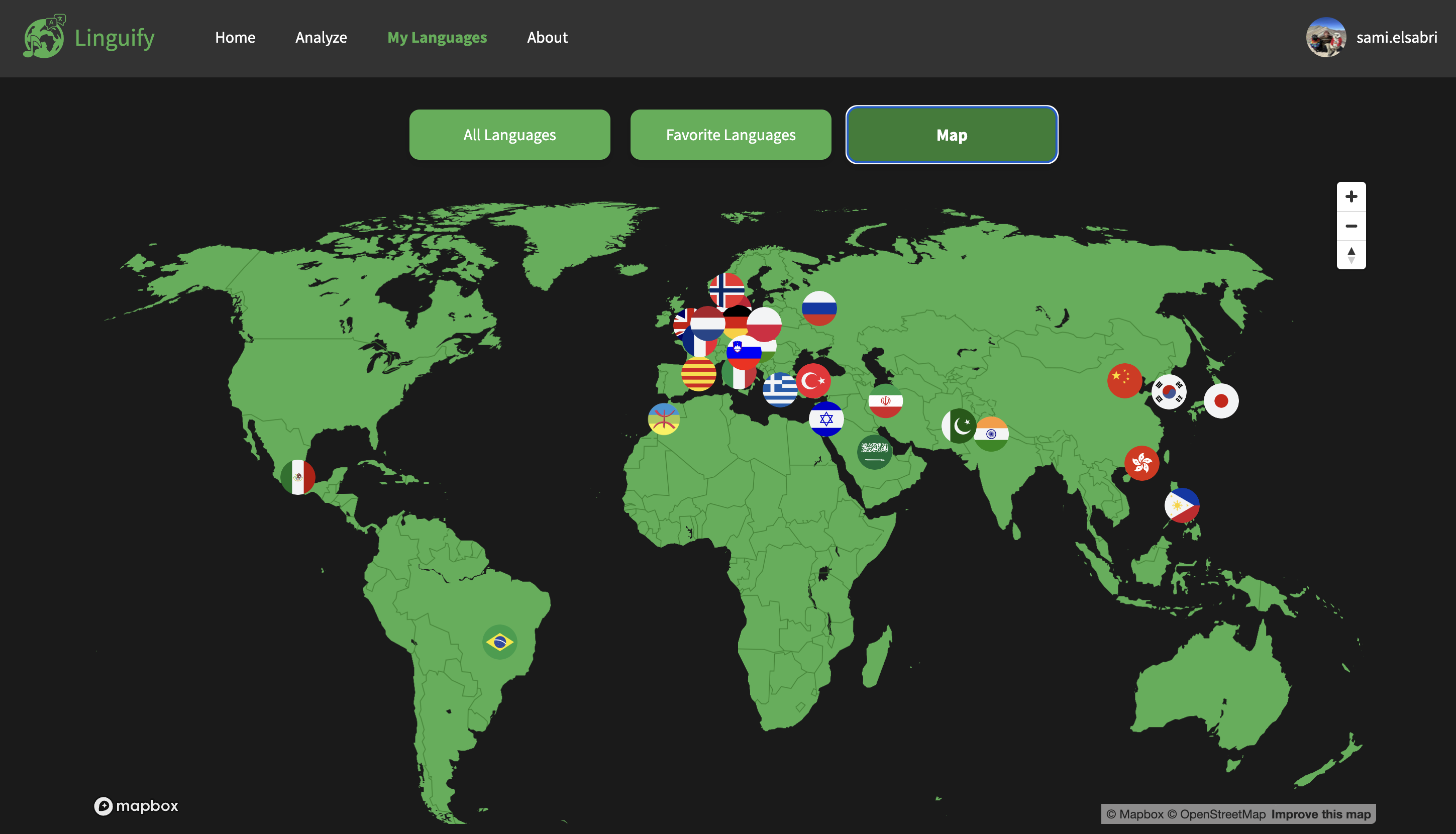
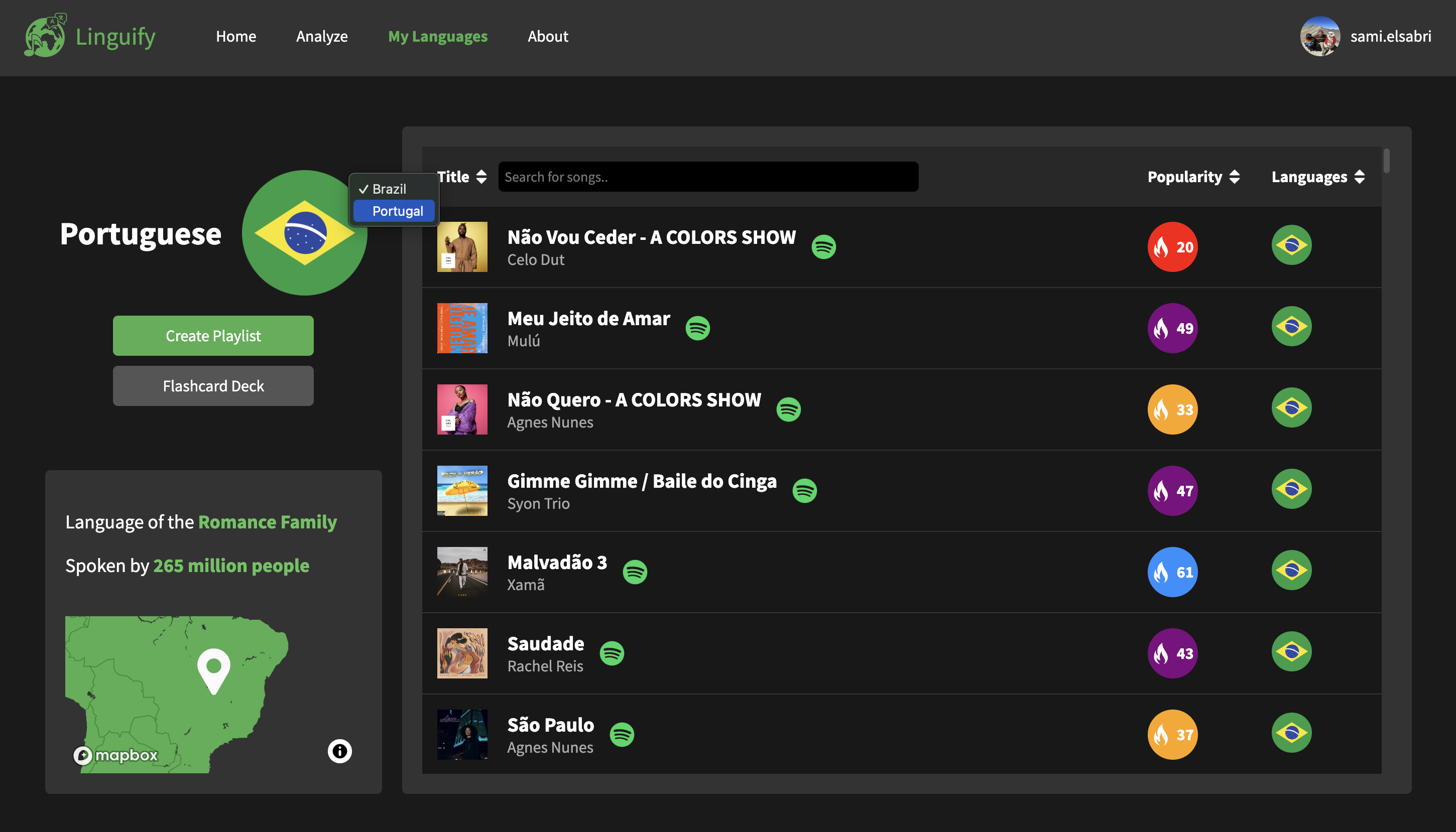
2. Geospatial Musical Footprint Using Mapbox, I developed an interactive global map that pins the origin of a user’s music library. This allows users to visualize their geographical “musical footprint” across different continents.
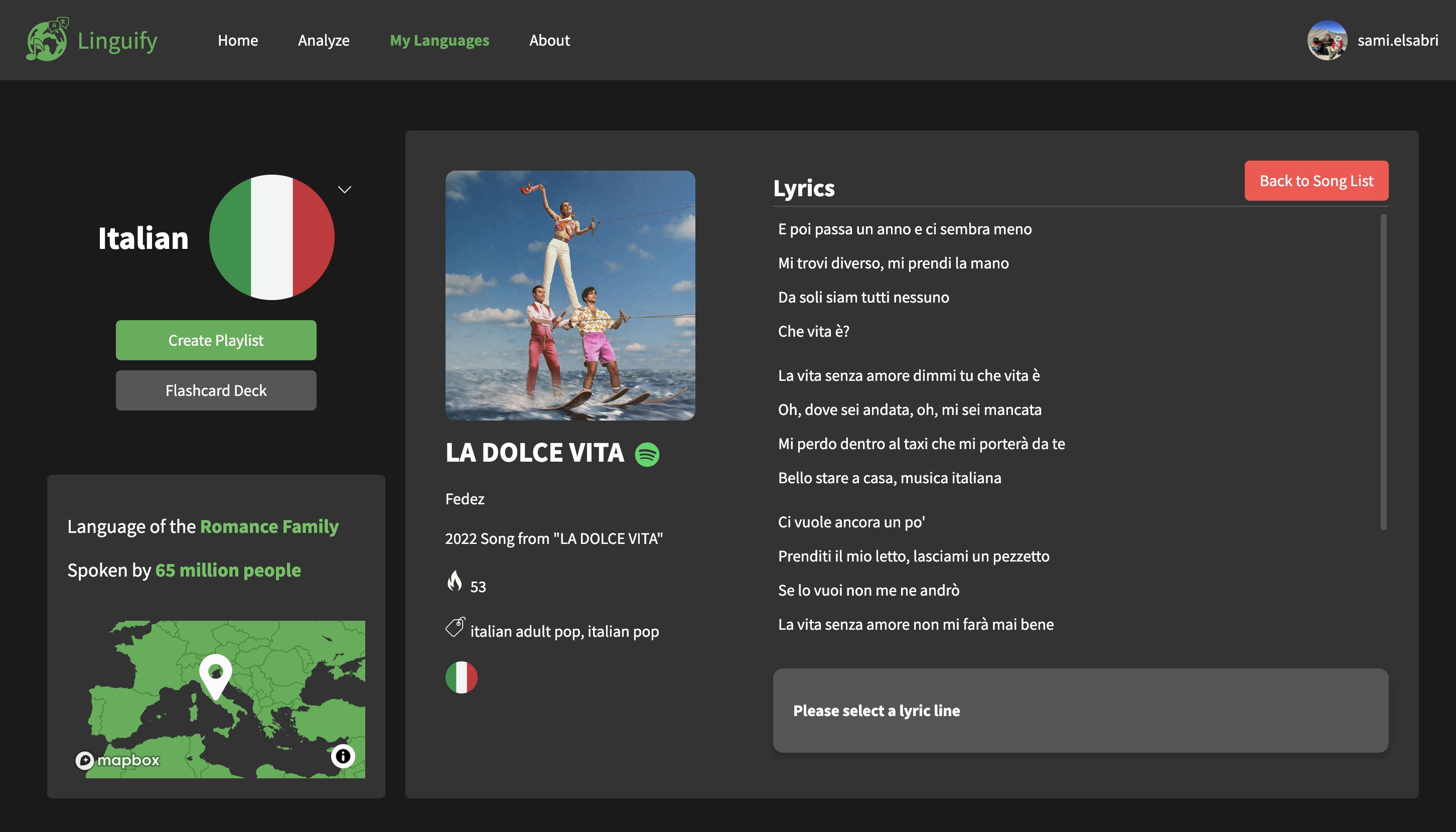
3. Lyric-Integrated Learning Linguify bridges data and education by allowing users to interact with song lyrics.
-
Metadata: Displays language families and speaker populations (e.g., “Italian: Romance Family, 65 million speakers”).
-
Learning Tools: Users can select lyric lines to generate flashcard decks or custom Spotify playlists for immersion (coming soon).